Challenges in Modern Beekeeping: The Rising Threat of Microplastics
In recent decades, beekeeping has faced numerous challenges and threats. Intensive farming, the use of pesticides and agrochemicals, the spread of diseases and pests, inadequate training of beekeepers leading to the imprudent use of veterinary drugs, product adulteration, climate change, monoculture farming, and more have long been part of this list. Now, a new concern has been added—microplastics.
Back in 1969, the UN experts defined microplastics as particles ranging from 1 μm to 5 mm in size. Modern research has elaborated that microplastics come in various shapes, such as particles or fibers, which contaminate the environment (Kershaw, P., et al., 2019).
A study by Edo S., et al. (2021) examined honeybees from urban and suburban areas around Copenhagen. They found microplastic fragments on the exoskeleton of 52% of sampled bees and fibers on 38%. The average fragment size was 234 ± 156 μm, while fibers measured 64 ± 39 μm. The highest contamination levels were noted in bees from urban areas compared to their suburban and rural counterparts.
Chemical analysis of microplastics revealed that the most common particles consisted of polyester, polyethylene, and polyvinyl chloride. In total, 13 synthetic polymers were identified.
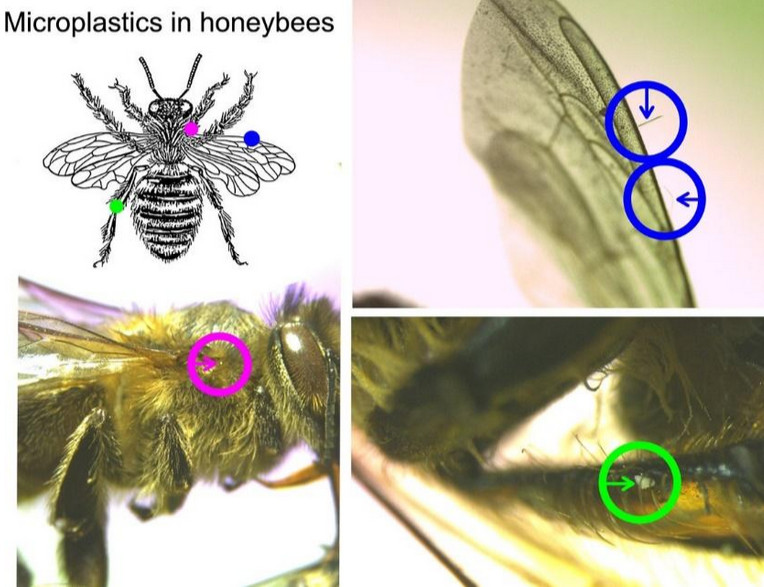
Microplastic Localization on Bee Exoskeletons
(Authors of the photo: Edo S., et al., 2021)
Similar studies were conducted in six Chinese provinces (Deng, Y., et al., 2021). Scientists detected four types of polymers in 66.7% of bee samples. During further experiments, bees were fed syrup containing microplastic particles sized 0.5, 5, and 50 μm in a laboratory setting. It was found that most microplastics accumulated in the bees’ midgut, which serves as both the stomach and intestine. Particularly, particles as small as 0.5 μm damaged the peritrophic membrane of the midgut and penetrated the abdominal cavity, spreading to the hemolymph (bee’s blood) or Malpighian tubules (excretory system). Researchers concluded that microplastics impair bee resilience to viral diseases by damaging gut tissues (Deng, Y., et al., 2021).
In our view, the detrimental impact of microplastics is even more profound. The peritrophic membrane of the midgut’s initial section secretes enzymes (e.g., amylase, lipase, invertase) that break down complex substances into simpler ones, facilitating digestion. The latter half of the midgut absorbs these simpler substances, passing them into the abdominal cavity for distribution throughout the bee’s body via the hemolymph. Damage to this membrane disrupts nutrition, thereby affecting overall bee vitality.
Similar conclusions were drawn by Wang, K., et al. (2021), who examined the impact of microplastics on honeybee lifespan, midgut microbiota levels, and microplastic interactions with gut bacteria. Honeybees with known emergence times were fed microplastics of 25 μm at concentrations of 0.5, 5, and 50 ml/L over 14 days in laboratory conditions. Results showed a 1.6% reduction in lifespan and significant qualitative and quantitative decreases in midgut microbiota. Microplastics were also found in the third section of the digestive system (large and small intestines), partially modified, indicating some digestion likely due to gut bacteria.
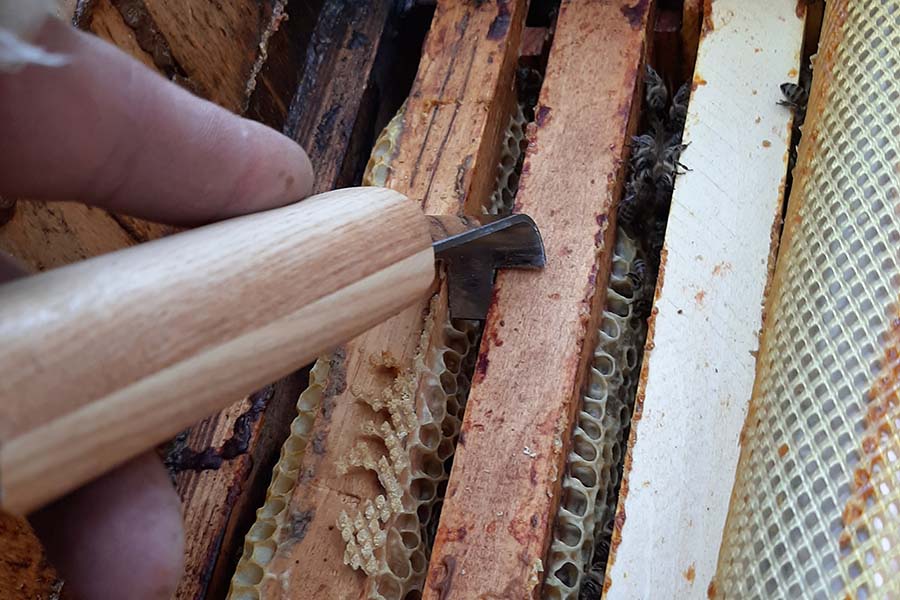
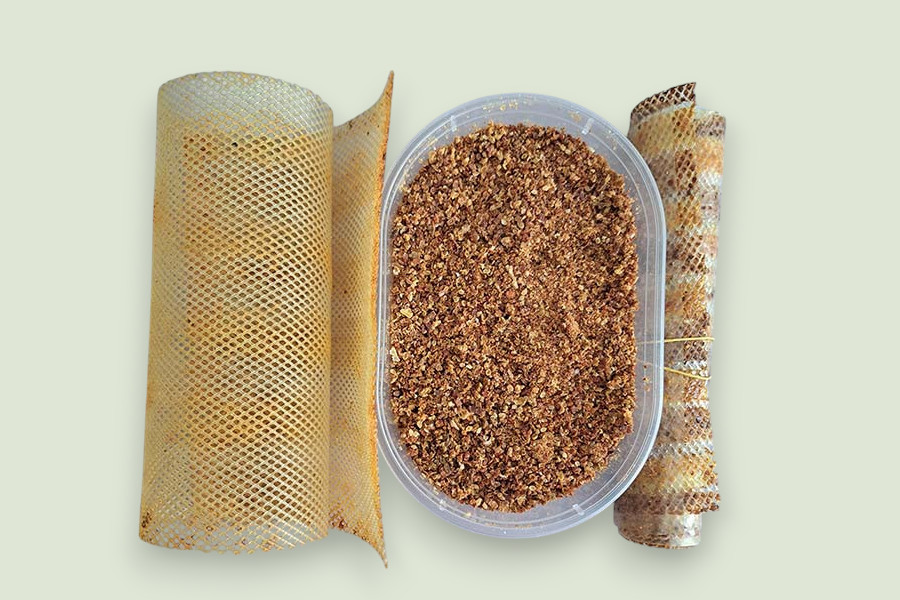
Research on the effects of microplastics on honeybees is still limited. Scientists need to address many questions, such as how microplastics affect queen and drone reproductive functions, brood development, and their potential as carriers of disease pathogens. Concerns include potential contamination of bee products due to extensive use of synthetic materials in hive construction and equipment. Regional microplastic concentrations, including those in Ukraine, also require study.
We anticipate that new methods for detecting and studying microplastics in bee products, as well as cleaning technologies, will become increasingly relevant in the coming years.
Roman Dvykaliuk
Ph.D. candidate, National University of Life and Environmental Sciences of Ukraine (NUBiP)
Chairman of the Board, Association of Managed Pollination “BeesAgro”
Leonora Adamchuk
Ph.D. in Agricultural Sciences, Associate Professor at NUBiP Ukraine
Head of the Women Beekeepers’ Foundation