Propolis Collection: Innovations in Beekeeping Equipment and Research
Propolis is a sticky, resinous substance collected by bees from the buds, leaves, and stems of wild plants, which they process and use for sealing hive cracks, polishing wax cell walls, and embalming intruders (e.g., mice, reptiles) (DSTU 4662:2006, 2006).
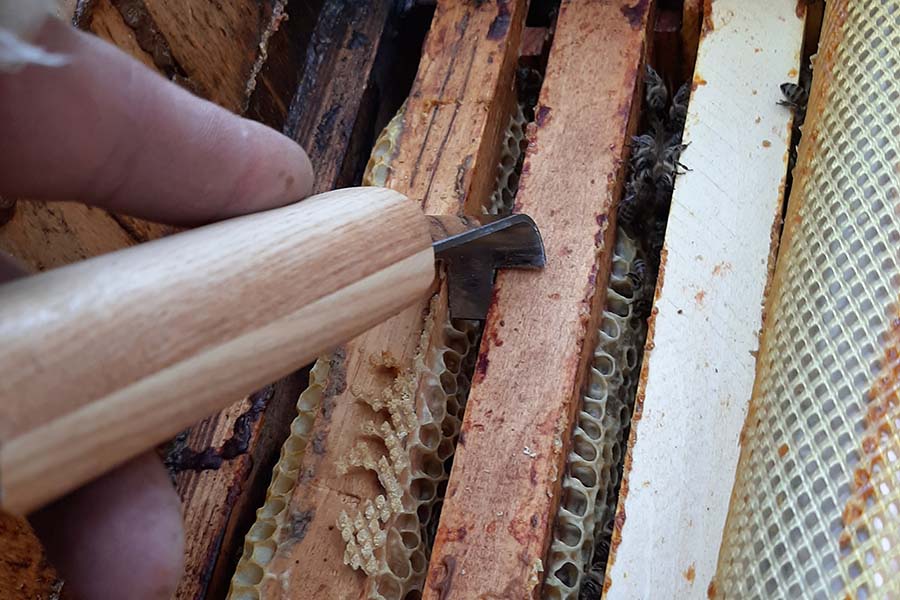
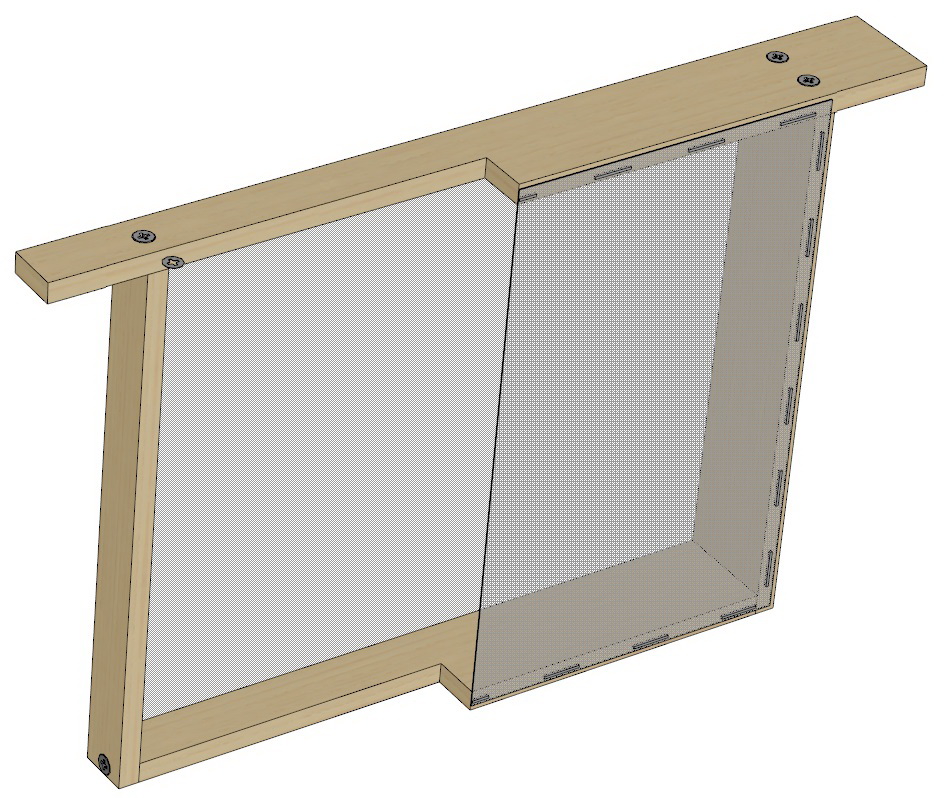
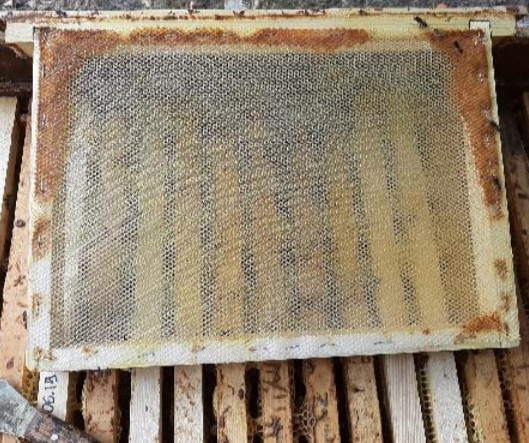
In 2019, we developed collectors (patent No. 139422) to explore new methods of propolis collection from honeybees in the moderate climate of Ukraine. The collectors are designed as hive frames measuring 435×300 mm and include three different types (Fig. 1). The first type features a solid frame, the second has an opening cut into the top bar (Fig. 1, a), and the third incorporates a wick for applying essential oil to stimulate propolis deposition through foreign scents. Elastic nets made from ethylene-vinyl acetate, produced by Stanz Pres (https://parkplus.com.ua/ua/setka-dlya-sbora-propolisa), were attached to both sides of the collectors with metal staples.
а
б
Fig. 1. Propolis Collectors: a – 3D model of the hive frame collector in section; b – collector in a bee colony during inspection with partial propolis deposition.
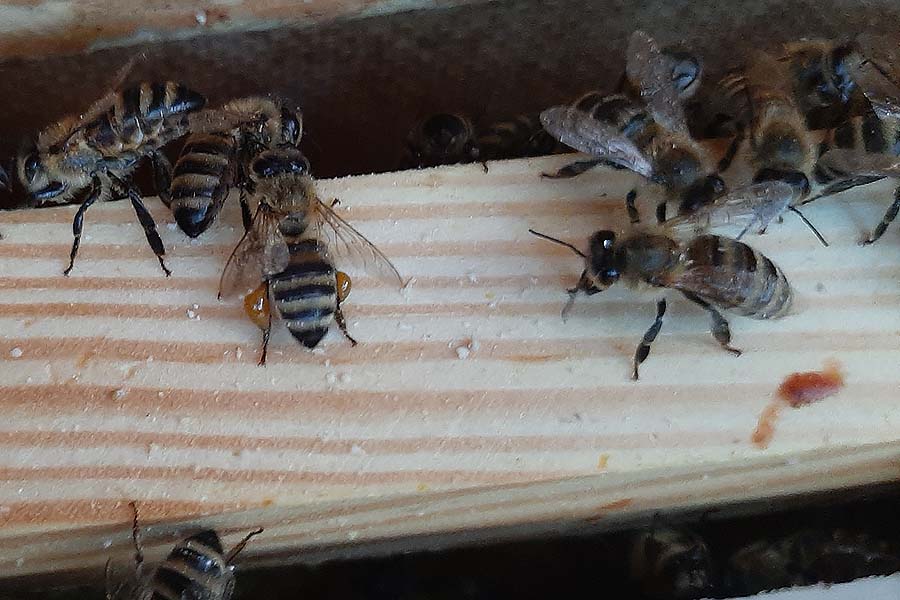
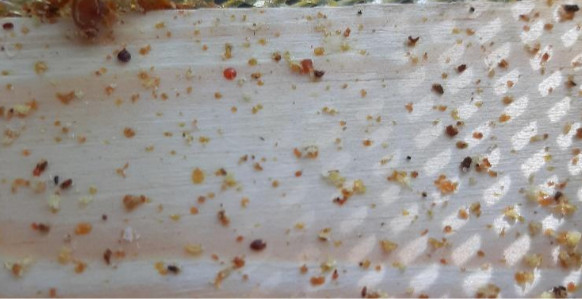
The research, conducted at an apiary in Kyiv Oblast, Ukraine, showed that while this method produced clean, wax-free propolis, it was low-yielding and required further study. The placement of collectors within the hive prevented bees from entering the collector at any time. Detailed inspections revealed the formation of droplet-like deposits on the bottom bar of the collectors (Fig. 2). These deposits were consistent in appearance and composition with the propolis in the nets.
б
б
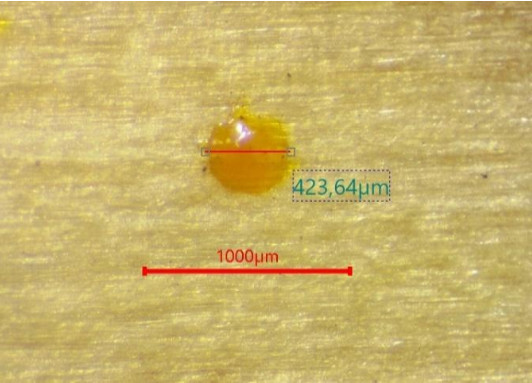
Fig. 2. Propolis Formations on Collector Bars: a – general view of part of the bottom bar with wax crumbs and propolis droplets; b – close-up with diameter measurement of a propolis droplet.
Microscopic (Fig. 2, b) and statistical analyses confirmed that bees could inadvertently lose propolis by liquefying it during manipulation in the hive or collection devices (Dvykaliuk et al., 2022). Previously, only wax crumb loss during comb building was documented.
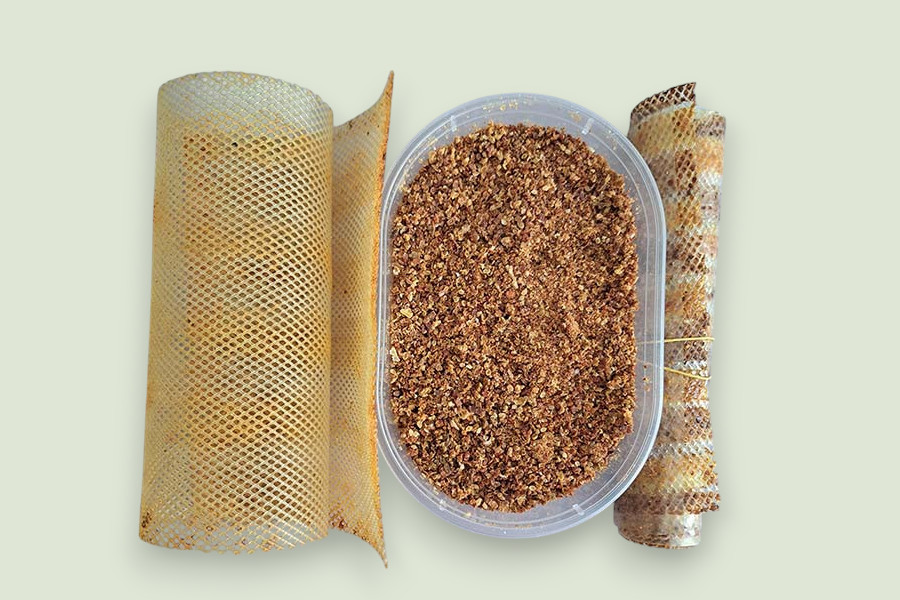
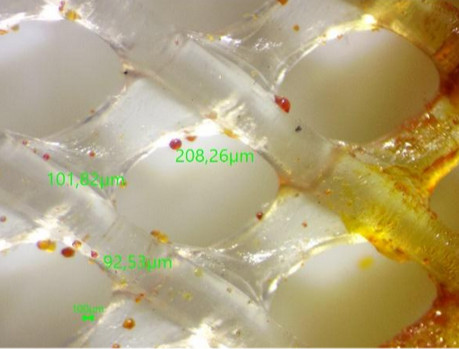
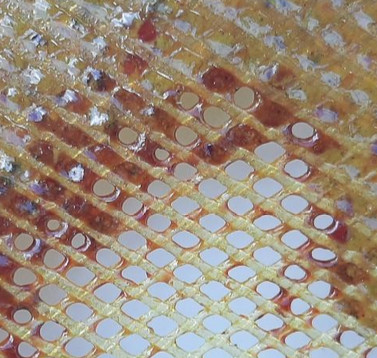
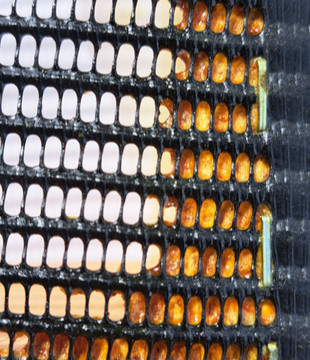
Analysis of propolis-covered nets during the 2019–2022 beekeeping seasons revealed that bees first deposit propolis around the perimeter of net openings before covering the center (Fig. 3).
б
б
в
Fig. 3. Propolis-Covered Nets: a – net with droplet diameter measurements and propolis-covered section; b – net with propolis partially covering cells; c – net in collector with partial cell closure.
Saccardi et al. (2022) studied the interaction between propolis and honeybee mandibles, detailing the internal structure of the mandibular surface. The goal was to understand how bees handle sticky plant resins. They found that mandibles, which contact propolis, are coated with anisotropic micro-patterns resembling scales. Tests on propolis adhesion showed that a natural enzyme layer from the mandibular glands reduced adhesion fourfold, indicating that the mandibular surface might be oleophilic.
As bees deposit liquefied propolis (Fig. 3, a) on artificial surfaces, wettability can play a significant role in propolis application. This property may accelerate net coverage and influence propolis productivity. Previously, materials for nets were chosen primarily based on durability, cost, food contact safety, and ease of cleaning. Surface wettability, however, is critical in many fields, from mining to biomedical materials (Beketov & Shynkarenko, 2022).
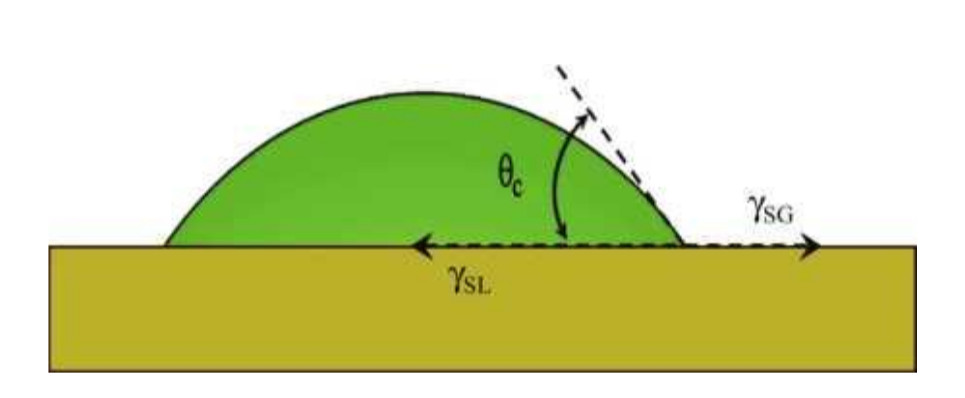
Fig. 4. Contact Angle Measurement: Illustrating liquid spread on a surface (Hebbar et al., 2017).
Measuring the contact angle helps understand the interaction between a surface and a three-phase system (solid/liquid/air). The sessile drop method is commonly used to analyze contact angles. Surfaces with contact angles >90° are hydrophobic, while those <90° are hydrophilic (Hebbar et al., 2017). For propolis in its liquid phase, selecting hydrophilic materials for nets and grids is recommended. Our future research aims to identify the optimal materials and confirm the hypothesis that wettability enhances propolis productivity.
Roman Dvykaliuk,
Chairman, Association of Managed Pollination “BeesAgro,” Ph.D. candidate, National University of Life and Environmental Sciences of Ukraine, Kyiv, Ukraine
References
- DSTU 4662:2006. Propolis. Technical specifications. [Effective from 2007-07-01]. Kyiv: Derzhspozhyvstandart, 2007.
- Saccardi, L., et al. (2022). Interaction between honeybee mandibles and propolis. Beilstein Journal of Nanotechnology, 13, 958–974. https://doi.org/10.3762/bjnano.13.84.
- Dvykaliuk, R., et al. (2022). Propolis Drops as Evidence for Dilution of Propolis by Honey Bees?, Bee World, 99:4, 110–116. https://doi.org/10.1080/0005772X.2022.2094139.
- Beketov, G., & Shynkarenko, O. (2022). Surface wetting and contact angle: basics and characterization. Himia, Fizika ta Tehnologia Poverhni, 13(1), 3–35. https://doi.org/10.15407/hftp13.01.003.
- Hebbar, R. S., et al. (2017). Contact angle measurements. In Membrane characterization. Elsevier. 219–255. https://doi.org/10.1016/B978-0-444-63776-5.00012-7.
- Collector for obtaining propolis from bee colonies: patent 139422 Ukraine: IPC A01K 47/02. No. u201905134; filed 14.05.2019; published 10.01.2020, bulletin No. 1.